MDF vs. Plywood for Custom Built-Ins: Which Material Should You Choose?
MDF vs. plywood for custom built-ins is not a choice with one universal winner. Both can produce strong, attractive cabinetry, but they do not perform the same way in every room or on every component. The right specification depends on moisture exposure, finish, shelf span, construction method and budget.
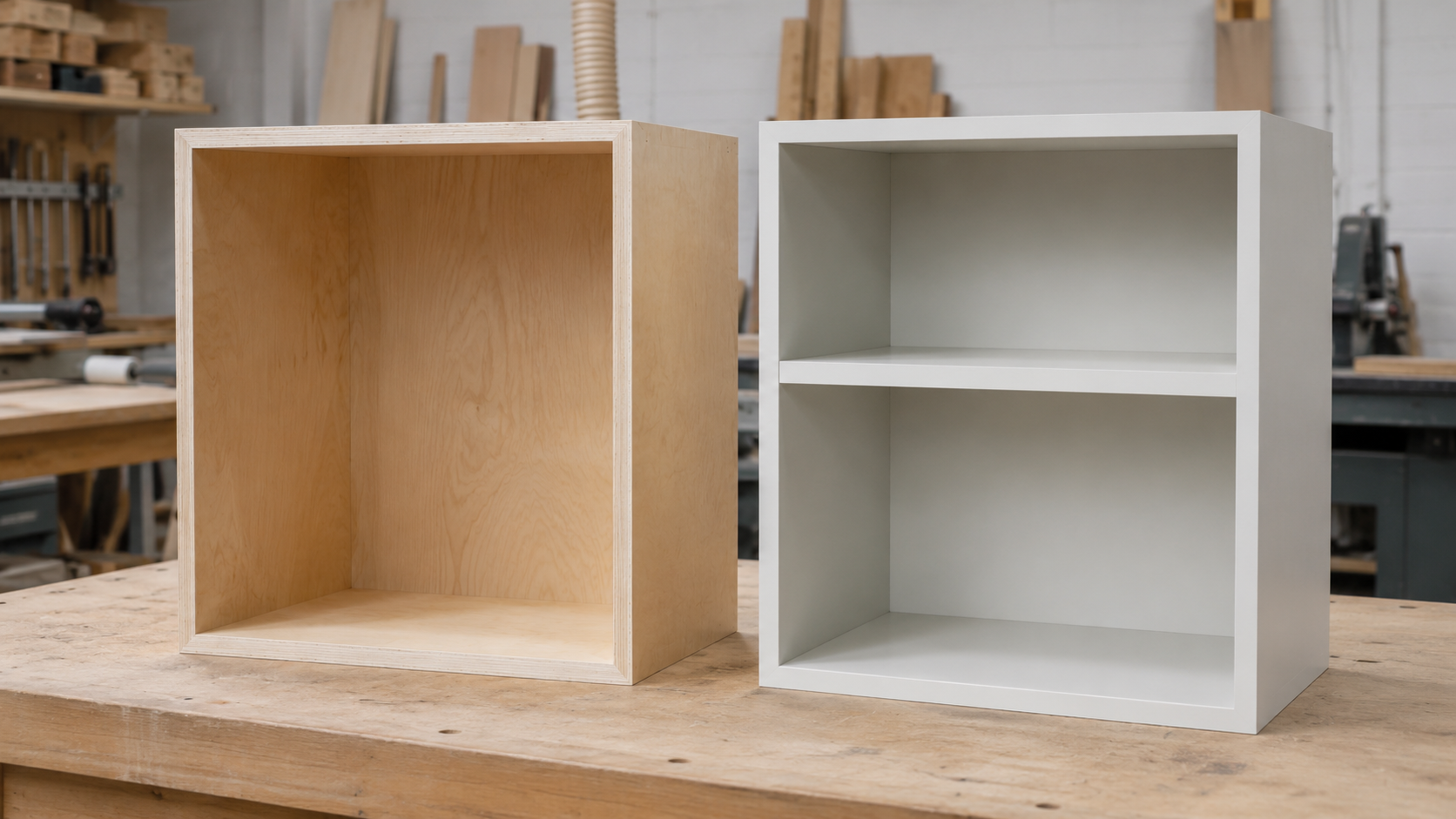
The short answer: prefinished birch plywood is generally Miter5’s preferred cabinet-box material when the project budget allows, especially in kitchens, laundry rooms and vanities. Properly designed 3/4-inch MDF is also extremely strong and gives a smoother painted finish. It can be a sensible choice for dry applications such as closets and mudrooms. The best cabinet is often not made from one material everywhere; it uses the appropriate material for each component and environment.
Homeowners researching custom cabinets and built-ins in Toronto and the GTA often ask whether plywood is worth the additional cost or whether MDF automatically means lower-quality cabinetry. Neither assumption tells the full story. Panel thickness, unsupported span, joinery, edge treatment, finishing and exposure to water can matter just as much as the material name on a quotation.
MDF vs. plywood for built-ins at a glance
| Consideration | Prefinished birch plywood | MDF |
|---|---|---|
| Best use | Cabinet boxes, visible interiors, kitchens, vanities, laundry cabinetry and components requiring greater moisture tolerance | Paint-grade boxes, doors, panels and shelving in drier rooms such as closets and mudrooms |
| Finish | Durable factory-finished veneer can remain visible inside the cabinet | Flat, uniform surface produces an exceptionally smooth painted finish |
| Strength | Strong, dimensionally stable and reliable for fastening | Very strong at 3/4 inch when spans and loads are properly designed |
| Moisture | Generally the safer Miter5 recommendation for rooms exposed to water, steam or higher humidity | Requires greater caution because water intrusion can cause swelling and permanent damage |
| Appearance | Natural birch veneer creates a finished wood interior | Consistent paint-grade appearance without visible wood grain |
| Budget | Typically the higher-investment option | Can reduce material cost, although edge preparation and professional finishing still require skilled labour |
This is not a ranking in which one product wins every category. The APA – The Engineered Wood Association identifies dimensional stability and reliable fastener holding among plywood’s advantages. The Composite Panel Association identifies tight tolerances, smooth surfaces and intricate machining as key MDF strengths. Those different properties are exactly why a cabinetmaker may specify them differently.
Why choose prefinished birch plywood?
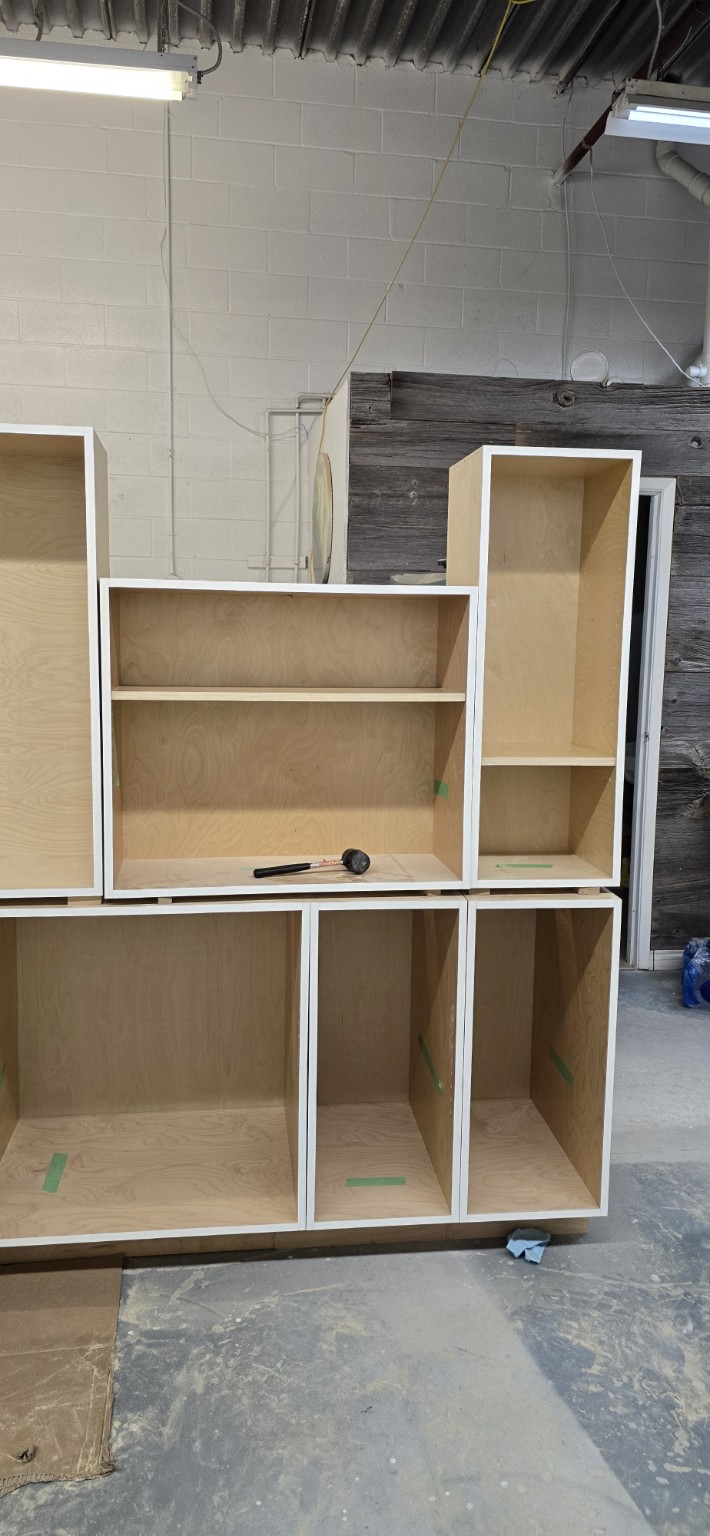
Prefinished birch plywood is built from cross-laminated veneer layers and supplied with a durable factory-applied finish on its faces. For cabinet interiors, that means the natural birch surface can remain visible without sending the completed cabinet boxes through the same paint-finishing process required by raw MDF.
Miter5 considers prefinished birch plywood the superior cabinet-box option when the client’s budget permits it. It offers excellent structural performance, holds fasteners reliably and is better suited than standard MDF or particleboard to locations where occasional moisture or changing humidity must be considered.
That does not make plywood waterproof. Plumbing leaks and prolonged water exposure can damage any wood-based cabinet product. It means that, when Miter5 is specifying cabinetry for a kitchen, vanity or laundry room, prefinished birch plywood provides a more appropriate margin of protection and long-term performance.
When does MDF make sense for custom cabinetry?
MDF is manufactured from refined wood fibres bonded into a dense, uniform panel. It has no veneer grain, knots or internal voids visible at the surface. That consistency makes MDF highly machinable and particularly well suited to components that will receive an opaque painted finish.
A common misconception is that MDF automatically means cheap cabinetry. Material selection is only one part of quality. A 3/4-inch MDF cabinet that is accurately CNC-machined, properly joined, edge-banded and professionally coated is fundamentally different from poorly designed mass-produced furniture using thin panels and weak connections.
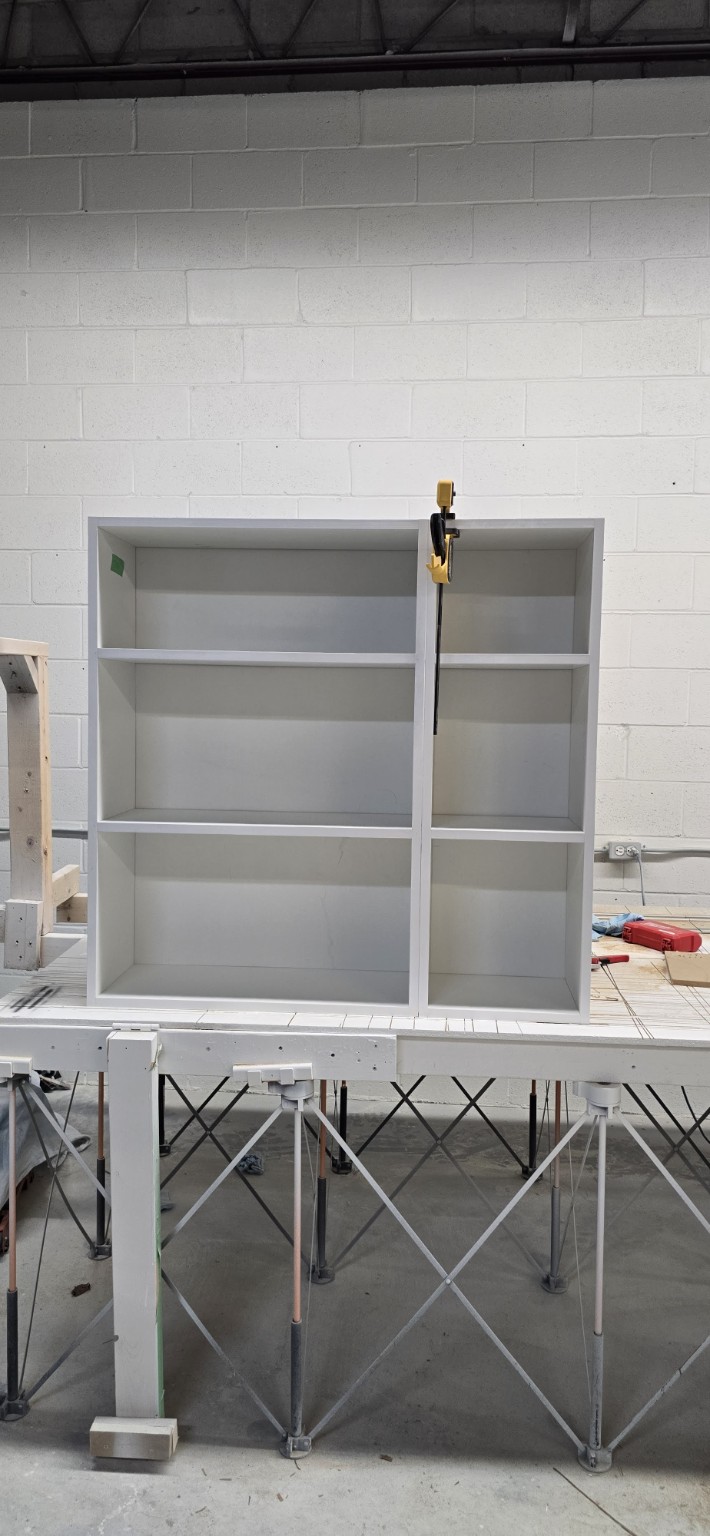
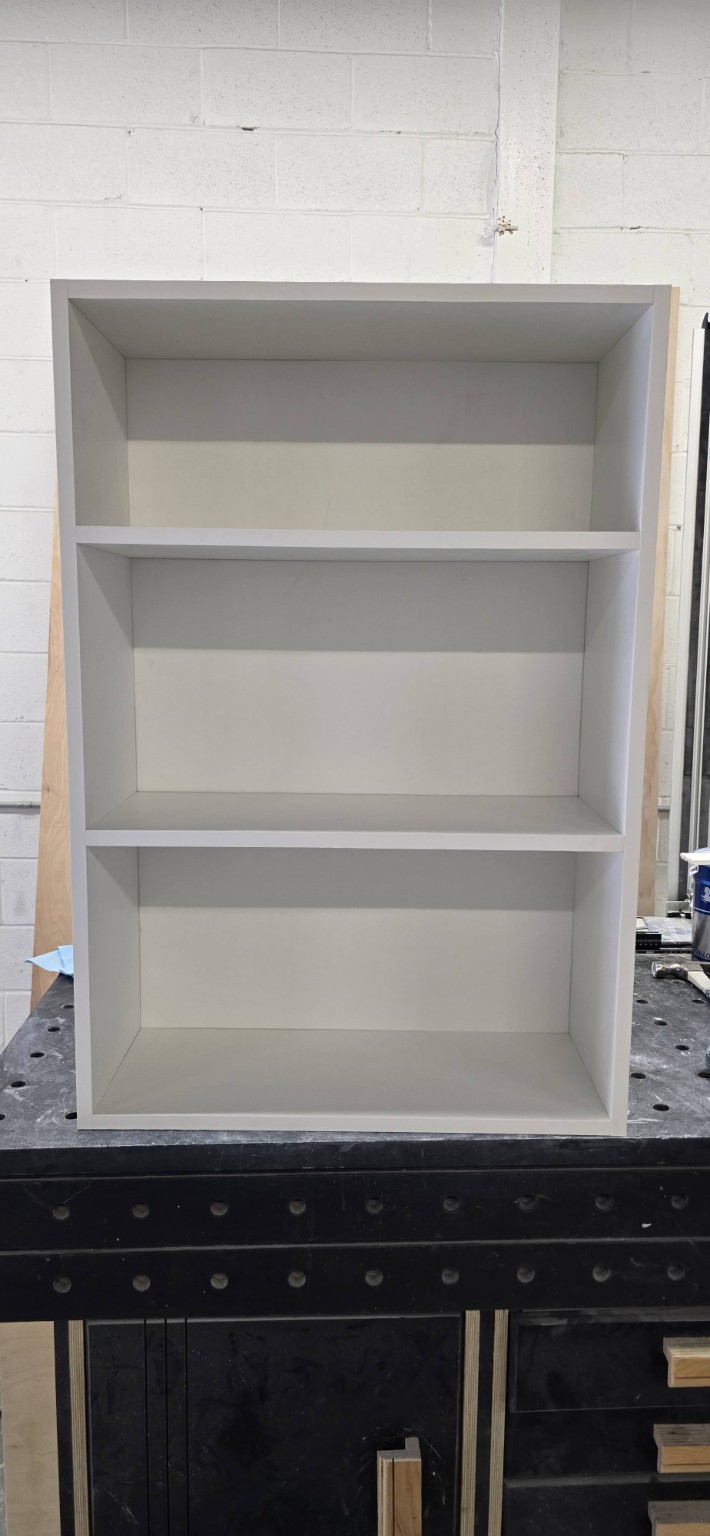
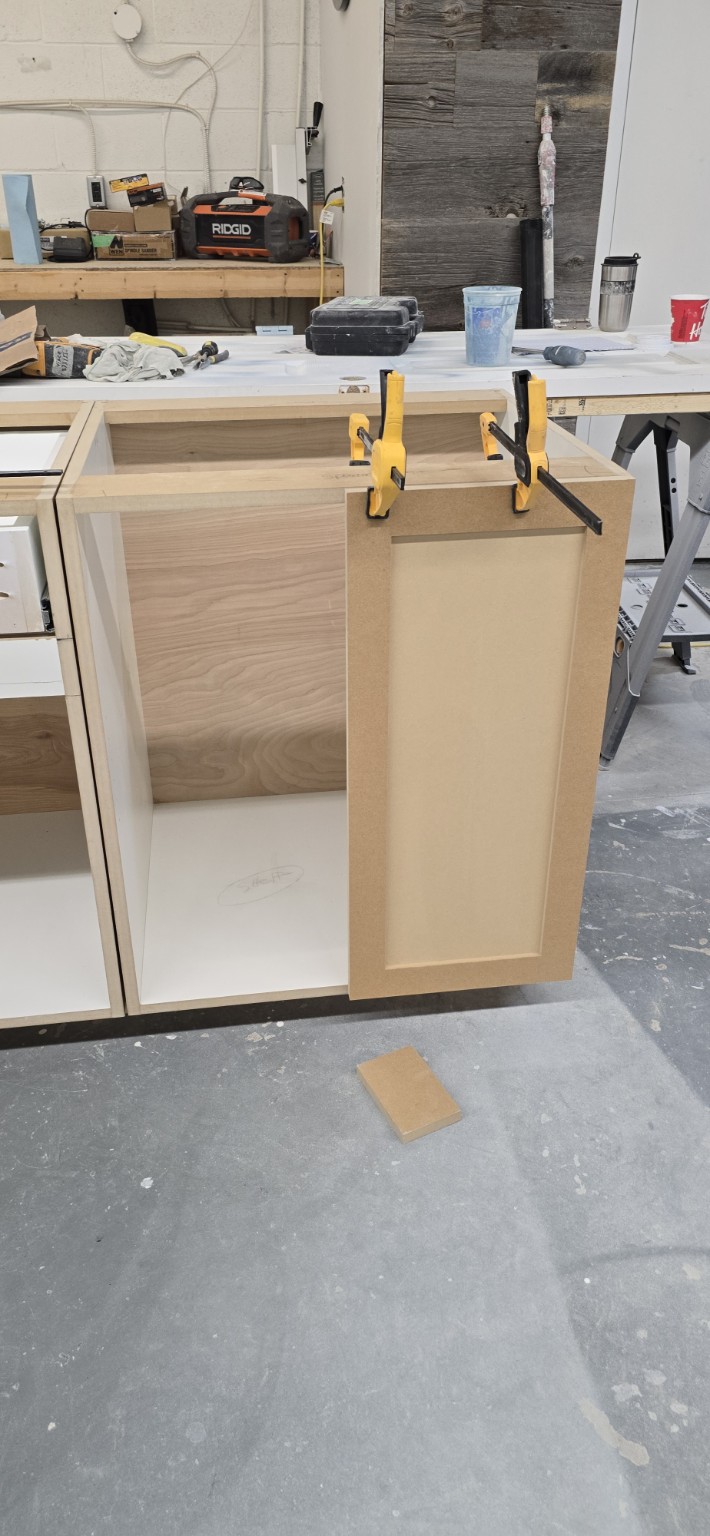
For the painted examples shown here, Miter5 edge-banded the MDF and finished it with Renner 765 cabinet coating. Renner’s own process guide lists the U765 topcoat for MDF, cabinetry, trim, doors and thick edges. The result is a clean, consistent paint-grade surface that plywood generally cannot match without more extensive preparation because plywood’s veneer and edge layers can telegraph through paint.
Why cabinet construction matters as much as material
Asking only whether a cabinet is MDF or plywood leaves out several decisions that determine how it will perform. Miter5 manufactures the pictured cabinetry from 3/4-inch sheet material. Components are CNC-machined for repeatability and assembled using Festool Dominos, adhesive and screws. Dados and rabbets are used where appropriate to locate and capture the back panels.
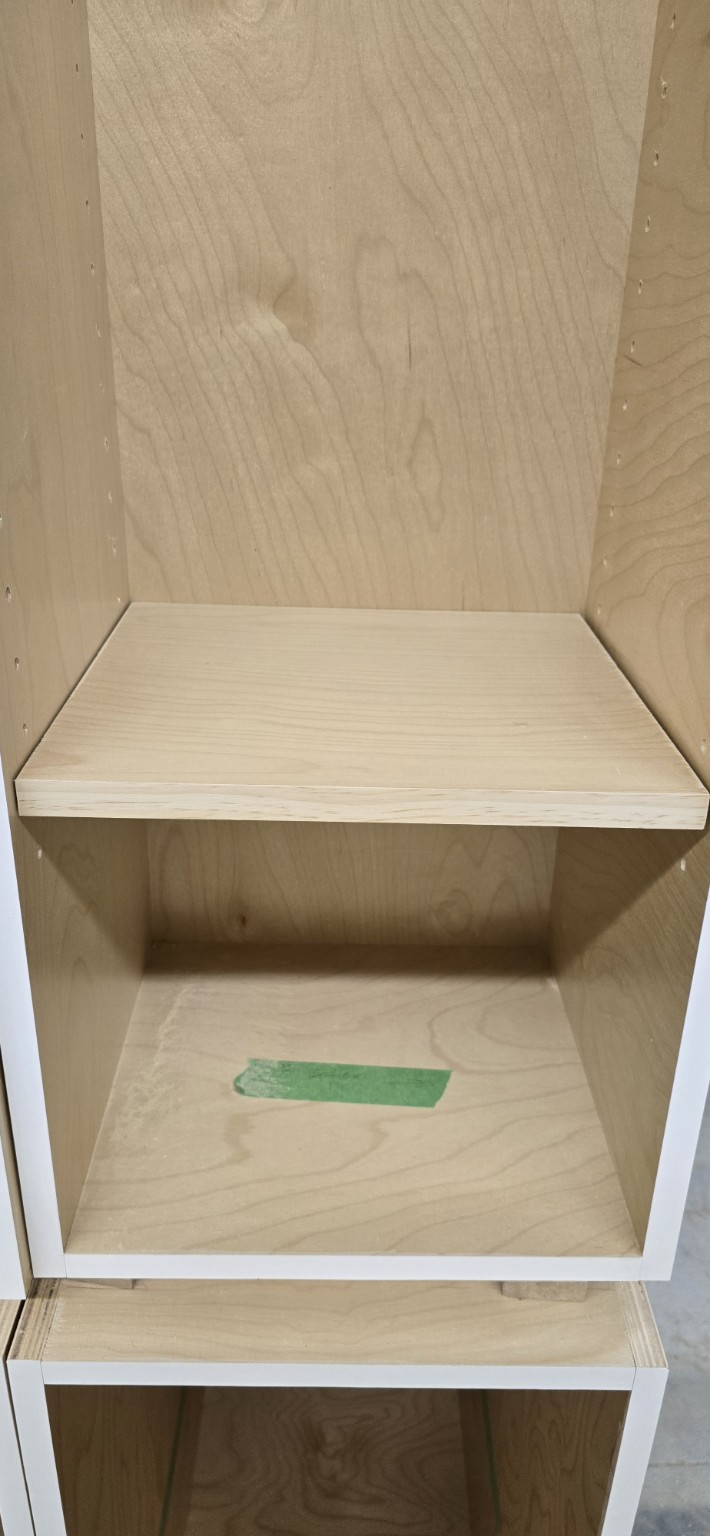
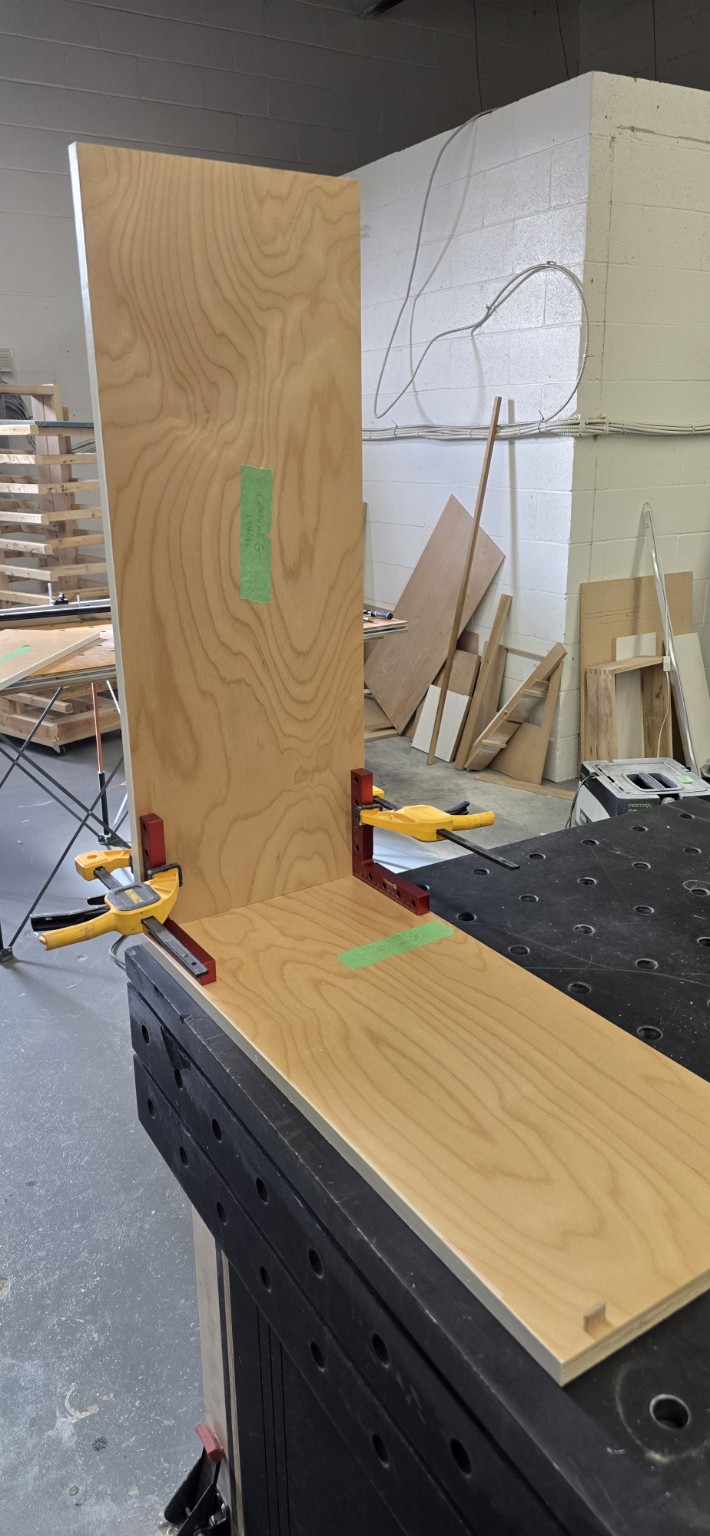
In the closet built-in shown below, the primary cabinet components are MDF while the backs are 1/4-inch (6.2 mm) birch plywood. This mixed-material construction is deliberate. A cabinetmaker can select a paint-grade material for the main components while using a different panel for the back based on the design and assembly requirements.
Shelf thickness and unsupported span
MDF is extremely strong when it is designed correctly. Miter5 normally keeps unsupported spans for 3/4-inch MDF and plywood shelving below approximately 20 inches. A longer span—potentially approaching 26 inches—may work in some situations, but expected weight, shelf depth, fixed versus adjustable construction and acceptable deflection must all be considered. Twenty inches is the more conservative shop standard, not a promise that every shelf of that length can carry unlimited weight.
This is why blanket claims about one material being stronger can be misleading. A poorly supported plywood shelf may sag, while a properly proportioned MDF shelf can perform reliably. Dividers, fixed joinery, front-edge reinforcement and reduced spans can all change the result.
The better questions are: Where will the cabinet be installed? What must each shelf support? Will the interior remain visible? Does it require a painted finish? How will the panels be joined and protected? What level of material investment fits the project?
Which cabinet material is better for each room?
Kitchens
Miter5 generally recommends prefinished birch plywood cabinet boxes for kitchens when the budget allows. Kitchens include plumbing, steam, spills and frequent daily use. MDF can be used in kitchen cabinetry, but plywood provides a more appropriate cabinet-box specification where moisture exposure is a realistic possibility. MDF can still be an excellent choice for painted doors, drawer fronts and decorative panels when they are properly produced and finished.
Vanities and laundry rooms
Vanities and laundry cabinetry also sit near plumbing and may experience higher humidity. For that reason, Miter5’s preferred recommendation is prefinished birch plywood. Some customers choose MDF to meet their budget, as occurred with projects photographed for this guide. That can be a valid informed decision, but the moisture tradeoff should be understood rather than ignored. Finished surfaces and edges must be protected, and standing water or leaks need immediate attention.
Closets and mudrooms
Closets typically have far less water and steam exposure, making MDF a practical paint-grade option. Mudroom cabinetry can also be well suited to MDF when it is designed for the actual conditions and kept away from repeated direct wetting. In both applications, MDF can provide strong cabinet components and a refined sprayed finish without requiring the higher material investment of prefinished birch plywood.
Painted built-ins and feature cabinetry
MDF is often the better painting substrate for built-ins intended to have an opaque finish. Its smooth, uniform face does not show wood grain, patches or veneer variation. Plywood may still be selected for boxes, shelves or hidden structural components, creating a hybrid specification rather than forcing one material to perform every role.
For home office built-ins, the desk surface, shelves and cabinet boxes need a specification suited to their use. Share your equipment dimensions and storage requirements with Miter5 when discussing materials.
How MDF and plywood affect the cabinetry budget
There is no honest universal price difference that applies to every built-in. Cabinet size, layout, doors, drawers, hardware, finish, lighting, installation conditions and design complexity may have a greater effect on the quotation than the panel material alone.
There is also a meaningful material-price spread between particleboard, medium-density fibreboard, high-density fibreboard and prefinished hardwood plywood. They should not be treated as interchangeable products. Prefinished birch plywood generally requires a higher material allowance, while painted MDF requires edge preparation, coating materials and professional finishing labour. Comparing sheet prices alone does not capture the completed cabinet cost.
The useful question for a homeowner is not “Which material is cheapest?” It is “Where will additional material investment improve performance, and where can MDF achieve the required result without compromising the design?” That discussion produces a project-specific specification instead of a generic upgrade charge.
Real Miter5 examples: three different specifications
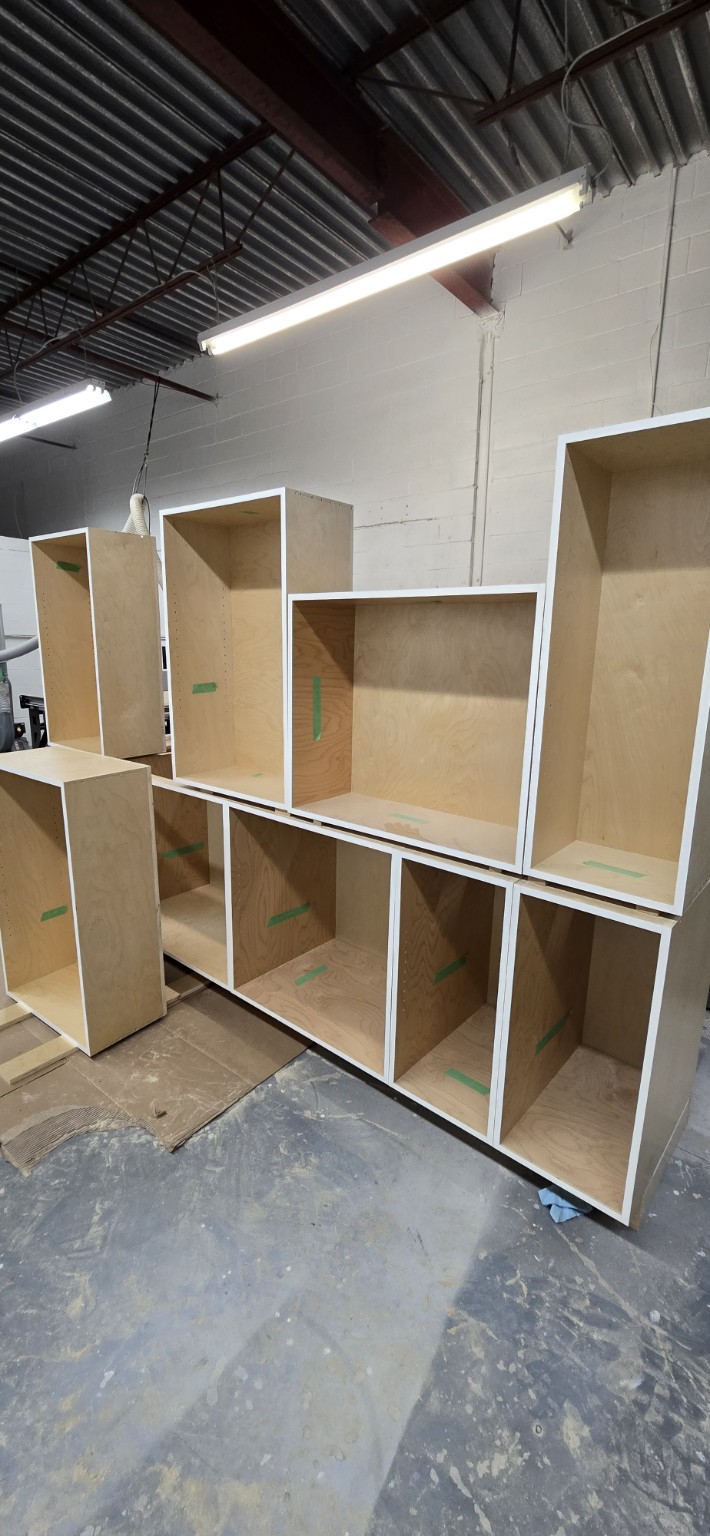
1. Prefinished birch plywood for kitchen and laundry cabinetry
The natural interiors, adjustable shelving and cabinet boxes shown here were constructed from 3/4-inch prefinished birch plywood. These customers had the budget to select the higher-investment material for cabinetry intended for harder-working rooms.
2. Edge-banded and painted MDF for a vanity
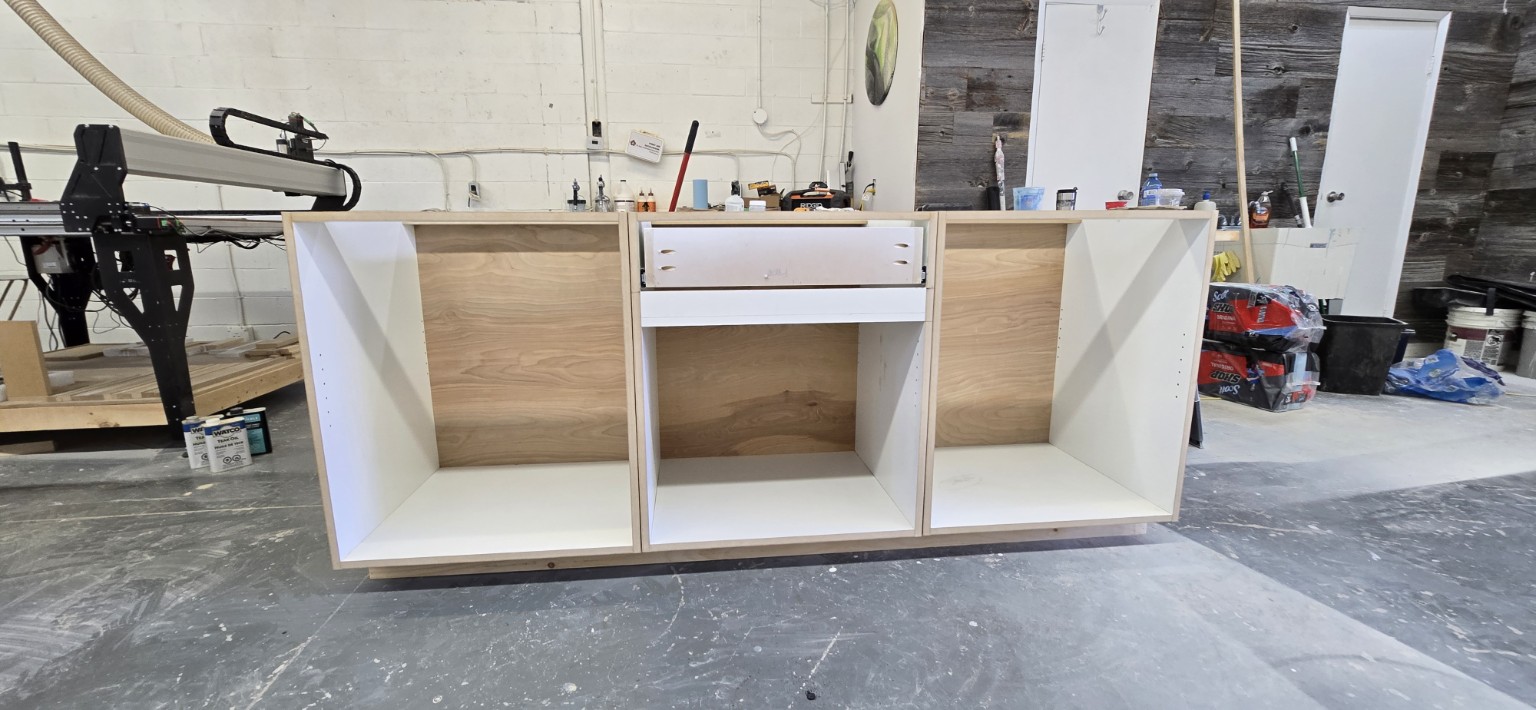
The MDF vanity cabinets demonstrate why MDF should not automatically be equated with poor workmanship. The boxes and shelves were produced from 3/4-inch MDF, edge-banded and professionally sprayed with Renner 765 cabinet coating. The customer accepted MDF as a budget-based material choice while understanding that Miter5 normally prefers plywood near plumbing and humidity.
3. MDF closet built-in with birch plywood backs
The closet project combines 3/4-inch MDF cabinet components with 1/4-inch (6.2 mm) birch plywood backs. The dry room made MDF an appropriate painted material, while the project also demonstrates that professional cabinetry can intentionally combine products instead of using one panel type throughout.
Frequently asked questions
Is MDF strong enough for custom built-ins?
Yes, when it is appropriately thick and the cabinet is correctly designed. Miter5 uses 3/4-inch MDF and normally keeps unsupported shelf spans below approximately 20 inches. Load, depth, joinery and reinforcement still need to be considered for each project.
Is plywood always better than MDF?
No. Prefinished birch plywood is generally Miter5’s preferred cabinet-box material for durability and moisture-prone rooms, but MDF usually produces the smoother opaque painted finish. The appropriate choice depends on the component and environment.
Can MDF be used in kitchens, laundry rooms or vanities?
It can be used, but Miter5 generally recommends prefinished birch plywood in these rooms because plumbing, steam and humidity increase moisture risk. If MDF is selected for budget reasons, the tradeoff should be understood and all finished surfaces and edges must be properly protected.
Why does MDF paint better than plywood?
MDF has a flat, uniform surface without visible veneer grain or knots. With suitable edge preparation, primer and cabinet coating, it can produce a more consistent painted finish than plywood.
Does plywood make a cabinet waterproof?
No. Plywood is generally more tolerant of changing moisture conditions than standard MDF, but leaks and standing water can still damage it. Plumbing issues should always be corrected promptly.
Should every cabinet component use the same material?
Not necessarily. A project may use plywood cabinet boxes, MDF paint-grade doors or panels, and thinner plywood backers. Choosing materials component by component can improve appearance, performance and budget control.
Planning custom cabinetry or a built-in?
Send Miter5 a room photograph, approximate dimensions, inspiration image, sketch or designer rendering. We can review the intended use, finish and environment before recommending an appropriate material specification and preparing a project-specific quotation.