
Door & Window Casing Installation in Toronto & the GTA
Miter5 provides professional door and window casing installation in Toronto and the GTA, including new trim installations and replacement casing for existing interiors. Profiles, reveals and proportions are planned around the doors, windows, jambs and surrounding trim so the finished casing looks properly integrated with the room.
New and replacement casing installed around interior door openings.
Interior window trim planned around jamb depth, reveals and proportions.
Installation adapted to uneven walls, existing jambs and renovation conditions.
Professional casing installation for individual rooms and full trim upgrades.
Door Casing Installation for New and Replacement Trim
Door casing creates the finished transition between the door jamb and the surrounding wall, but its proportions and installation determine whether that transition looks refined.
Professional door casing installation begins with the opening itself. Jamb depth, wall thickness, reveal size, casing width and the relationship to nearby baseboards all influence how the finished trim should be fitted.
Miter5 provides door casing and door trim installation for new and existing openings throughout Toronto and the GTA. Profiles can range from clean, simple contemporary casing to wider or more detailed moulded profiles, depending on the scale and architectural character of the interior.
The profile should not be selected in isolation. Casing width, depth and detail need to work with the door, surrounding baseboards, ceiling height and other trim so the opening feels properly proportioned within the room.
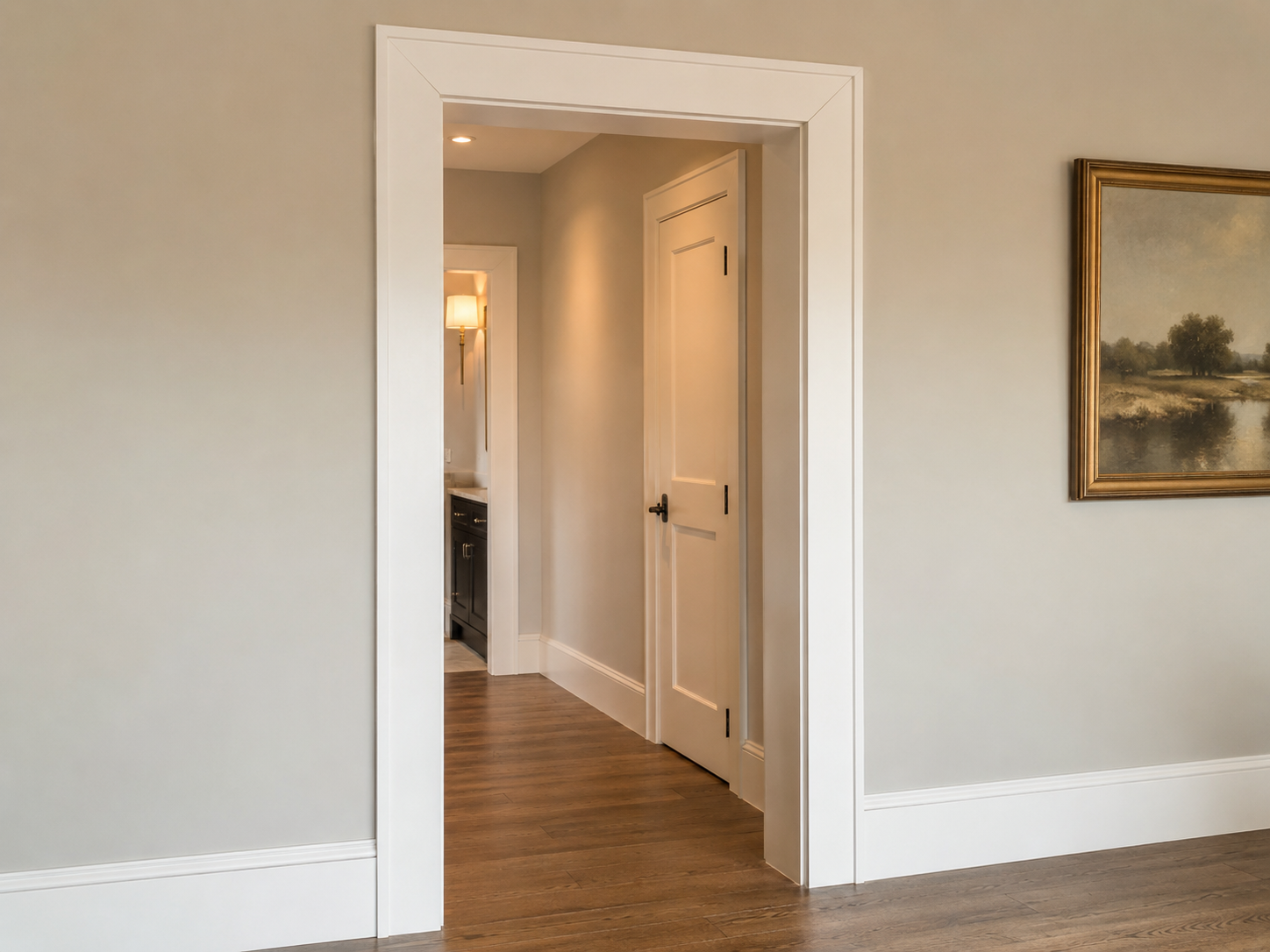
Door casing design example — profile, reveal and scale should work with the opening and surrounding trim.
Consistent Reveals
The visible margin between the jamb edge and casing should remain controlled around the opening so the trim reads as one consistent frame.
Profile & Scale
Casing width and profile need to suit the size of the door, ceiling height, baseboards and other architectural trim rather than being selected in isolation.
Clean Transitions
The casing has to meet baseboards, adjacent walls and nearby openings cleanly so the trim package feels coordinated throughout the room.
Replacing Dated or Damaged Casing
Door casing is often replaced during a larger trim renovation, after new flooring or doors are installed, or when an older profile no longer suits the interior. Removing the existing trim also exposes the jamb and wall conditions that the new casing has to cover.
Replacement casing may require adjustments where old paint lines, uneven drywall, damaged edges or previous trim dimensions are exposed. The new profile therefore needs to be selected with both the desired appearance and the existing opening conditions in mind.
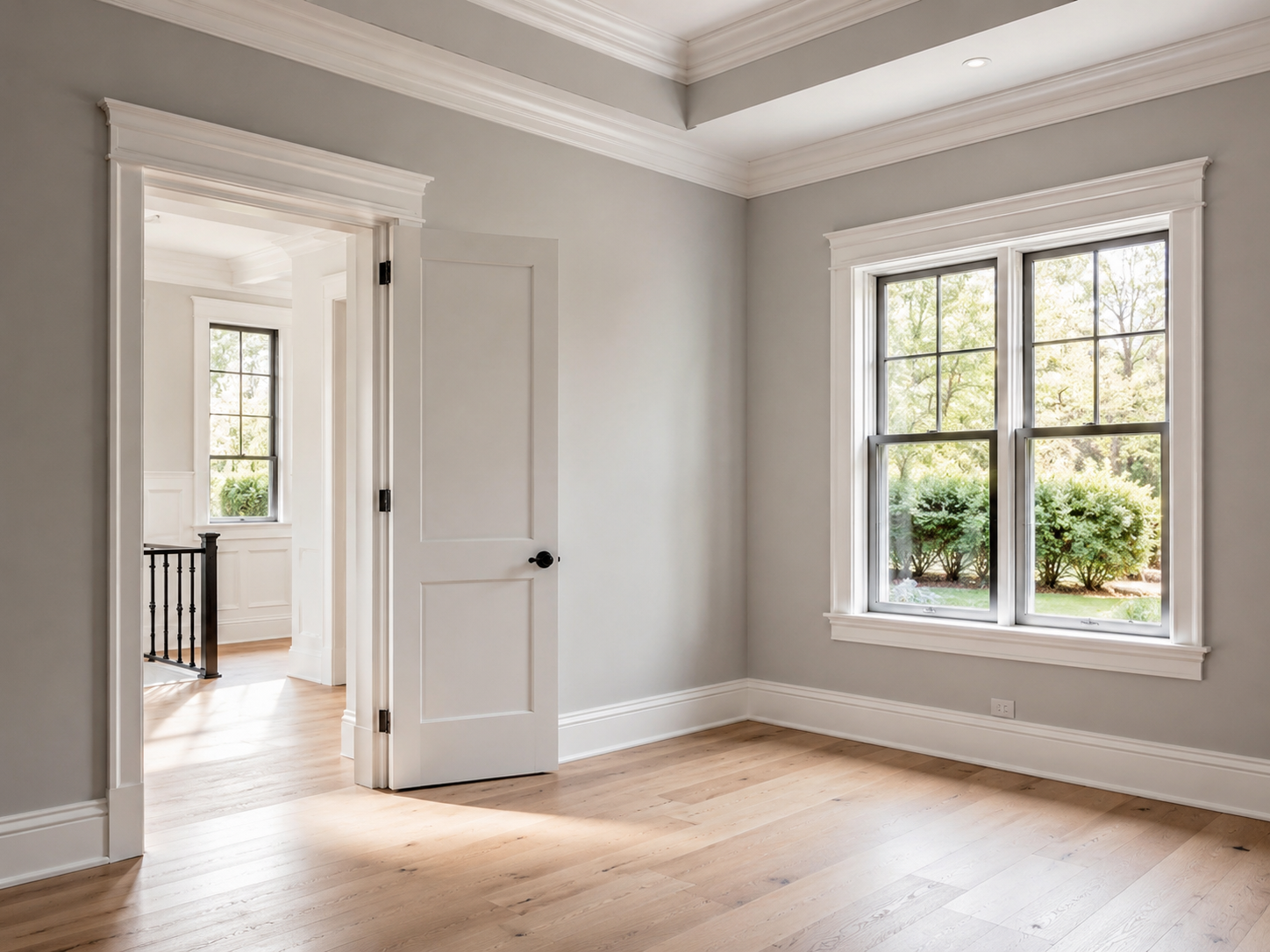
Window casing design example — the opening, jamb depth, reveal and surrounding trim all influence the finished proportions.
Window Casing Installation for New and Existing Openings
Window casing creates the finished transition between the window opening and the interior wall, but the final result depends on more than choosing a moulding profile.
Professional window casing installation requires the jamb depth, drywall position, reveal, casing width and surrounding trim to be considered together. Existing windows may also require extensions or other adjustments where the jamb does not finish flush with the wall surface.
Miter5 provides window casing and window trim installation for new and existing openings throughout Toronto and the GTA. The finished proportions are planned around the actual window, surrounding wall and nearby architectural trim rather than applying the same detail to every opening.
Jamb Depth
The window jamb needs to meet the finished wall correctly before casing is installed. Where the wall extends beyond the jamb, the opening may require additional preparation or extension material.
Balanced Reveals
The visible reveal around the opening should remain consistent so the casing forms a balanced frame and does not appear to shift as it travels around the window.
Proportion to the Room
Window casing should relate to the scale of the opening, nearby door casing, baseboards and other trim so the finished room reads as one coordinated interior.
Replacement Casing Can Reveal Conditions Hidden by the Old Trim
Removing old window casing can expose differences in drywall thickness, jamb depth, paint lines, damaged wall edges or previous trim dimensions. Those conditions can affect how the replacement casing is installed and how much of the existing wall needs to be covered.
For that reason, replacement window casing should be selected after the opening is reviewed rather than assuming the new trim can simply duplicate the dimensions of what was removed.
Existing Door and Window Openings Need to Be Evaluated Before New Casing Is Installed
Replacement casing often reveals conditions that were hidden behind the original trim.
In existing Toronto and GTA homes, door and window jambs may sit proud of the drywall, finish short of the wall surface or vary slightly around the same opening. Older walls may also be uneven or out of square.
These conditions affect how replacement casing is fitted. The opening needs to be assessed first so the new trim can maintain consistent reveals, clean joints and a finished appearance that works with the surrounding wall.
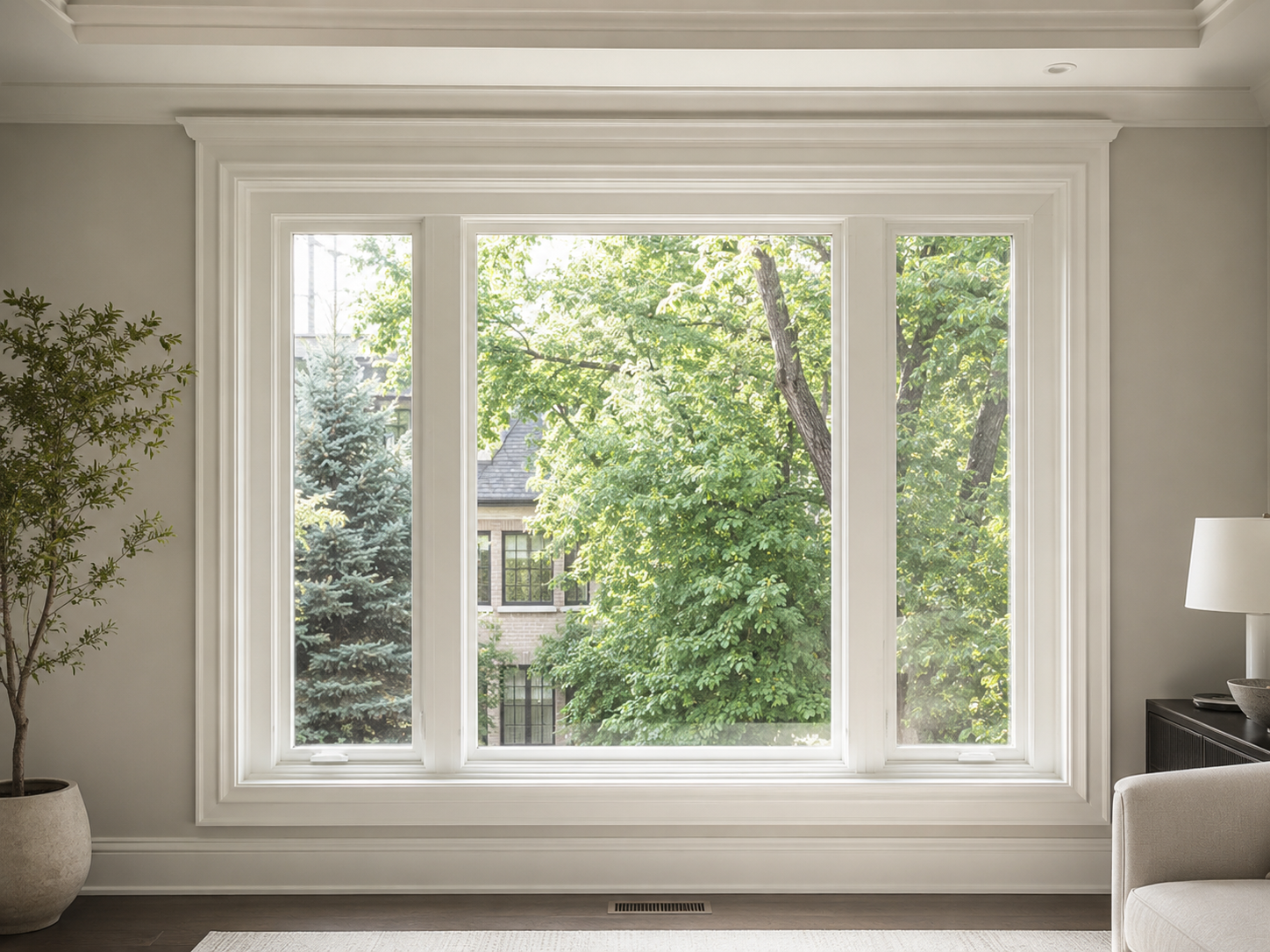
Casing design example — existing jamb, drywall and trim conditions influence how replacement casing is installed.
Proud Jambs
When the jamb extends beyond the finished wall, the casing has to transition between surfaces without creating unstable joints or an obvious twist in the trim.
Recessed Jambs
If the drywall projects beyond the jamb, additional preparation or extension material may be required before the casing can sit correctly around the opening.
Uneven Walls
Existing walls are not always perfectly flat or square. Casing needs to be fitted to the actual surface while keeping the visible frame around the opening balanced.
Existing Trim
New casing also has to work with nearby baseboards and adjoining trim. When casing is updated alongside baseboard installation , the widths, depths and profiles can be planned together for cleaner transitions.
Replacement Casing Is Often Part of a Larger Interior Trim Upgrade
Door casing is commonly replaced during an interior door installation , especially when new doors, jambs or a different trim profile are being introduced. Window casing may be updated at the same time so connected rooms share a consistent trim design.
Damaged casing, visible gaps, poor previous installations and mismatched trim from earlier renovations can also make replacement worthwhile.
Miter5 provides new and replacement casing installation for individual doors and windows as well as larger trim upgrades throughout Toronto and the GTA.
Questions About Casing Installation
Common questions homeowners ask when planning new or replacement door and window casing installation in Toronto and the GTA.
How much does door and window casing installation cost?
Casing installation cost depends on the number and size of the openings, the profile and material selected, whether existing casing has to be removed, and the condition of the jambs and surrounding walls. A straightforward new installation is different from replacing trim around older openings that require additional fitting or preparation.
For an accurate quote, the openings and project conditions need to be considered rather than relying on a single price per door or window.
How do I choose a casing installer in Toronto?
Look for a casing installer who regularly works with both door and window trim and understands the conditions that affect the finished installation. Consistent reveals, clean joints, jamb depth, uneven walls, casing proportions and transitions into nearby baseboards all need to be considered.
A professional casing installer in Toronto should also be able to assess whether existing jambs are proud of or recessed from the drywall, explain appropriate casing profiles and materials, and determine what preparation is required before replacement trim is installed.
Can you replace casing without replacing the door or window?
Yes. Existing door and window casing can often be removed and replaced while keeping the existing door, window and jamb. Once the old casing is removed, the jamb depth, drywall edges and previous trim footprint can be assessed before the replacement casing is fitted.
What material is best for interior casing: MDF or wood?
Both MDF and solid or finger-jointed wood can be appropriate depending on the profile, finish and application. MDF offers a smooth, consistent surface for painted trim and is available in many common profiles. Wood may be preferred where the design, installation conditions or finishing requirements call for it.
The right material should be selected together with the casing profile, dimensions and surrounding trim rather than choosing material alone.
Should door casing and window casing match?
They often use the same or closely related profile so the interior feels coordinated, but they do not have to be identical in every application. The scale of the openings, architectural style, nearby baseboards and existing trim should all be considered when determining casing width and profile.
How should casing work with the baseboards?
Casing and baseboards should be proportioned as part of the same trim package. The casing needs enough width and depth to create a clean termination where the baseboard meets the door opening, while the two profiles should look visually balanced within the room.
What happens if the jamb is not flush with the drywall?
A jamb that sits proud of or recessed from the drywall changes how the casing can sit against the opening. Depending on the condition, the installation may require additional preparation, extension material or careful fitting so the casing remains stable and the finished reveal looks consistent.
Do casing corners always have to be mitred?
No. Mitred corners are common with many casing profiles, but the appropriate corner treatment depends on the trim design. Some architectural styles use other arrangements, including square or decorative head details. The joint should suit the profile and overall design rather than forcing the same construction method onto every casing style.
How long does casing installation take?
Installation time depends on the number of doors and windows, whether existing casing has to be removed, the complexity of the profile and the condition of each opening. Projects involving uneven walls, jamb adjustments or extensive replacement work can require more fitting than straightforward new trim installation.
Can casing be replaced throughout an entire home?
Yes. Door and window casing can be replaced as part of a broader interior trim renovation. Updating several connected rooms at the same time makes it possible to coordinate casing widths, profiles and baseboard proportions throughout the home instead of treating each opening separately.
What should I send Miter5 for a casing installation quote?
Helpful information includes your city, approximate number of doors and windows, whether the project involves new or replacement casing, photos of the existing openings, and any casing profile or trim style you are considering. Photos are especially useful when existing jamb or wall conditions may affect the installation.
Planning a Casing Upgrade?
The final scope depends on the openings, existing conditions, casing profile and amount of replacement work involved. The next section makes it easy to send those details for a project quote.
Planning New or Replacement Casing for Your Home?
Miter5 provides professional door and window casing installation throughout Toronto and the GTA, from individual openings to larger interior trim upgrades.
Send us a few project details and photos of the existing doors or windows. We can review the scope, casing style and installation conditions and determine what is required for your project.
Send Us the Basics of Your Casing Project
- Your city or project location
- Approximate number of doors and windows
- New casing or replacement of existing casing
- Photos showing the openings and surrounding trim
- Any casing profile, width or trim style you are considering