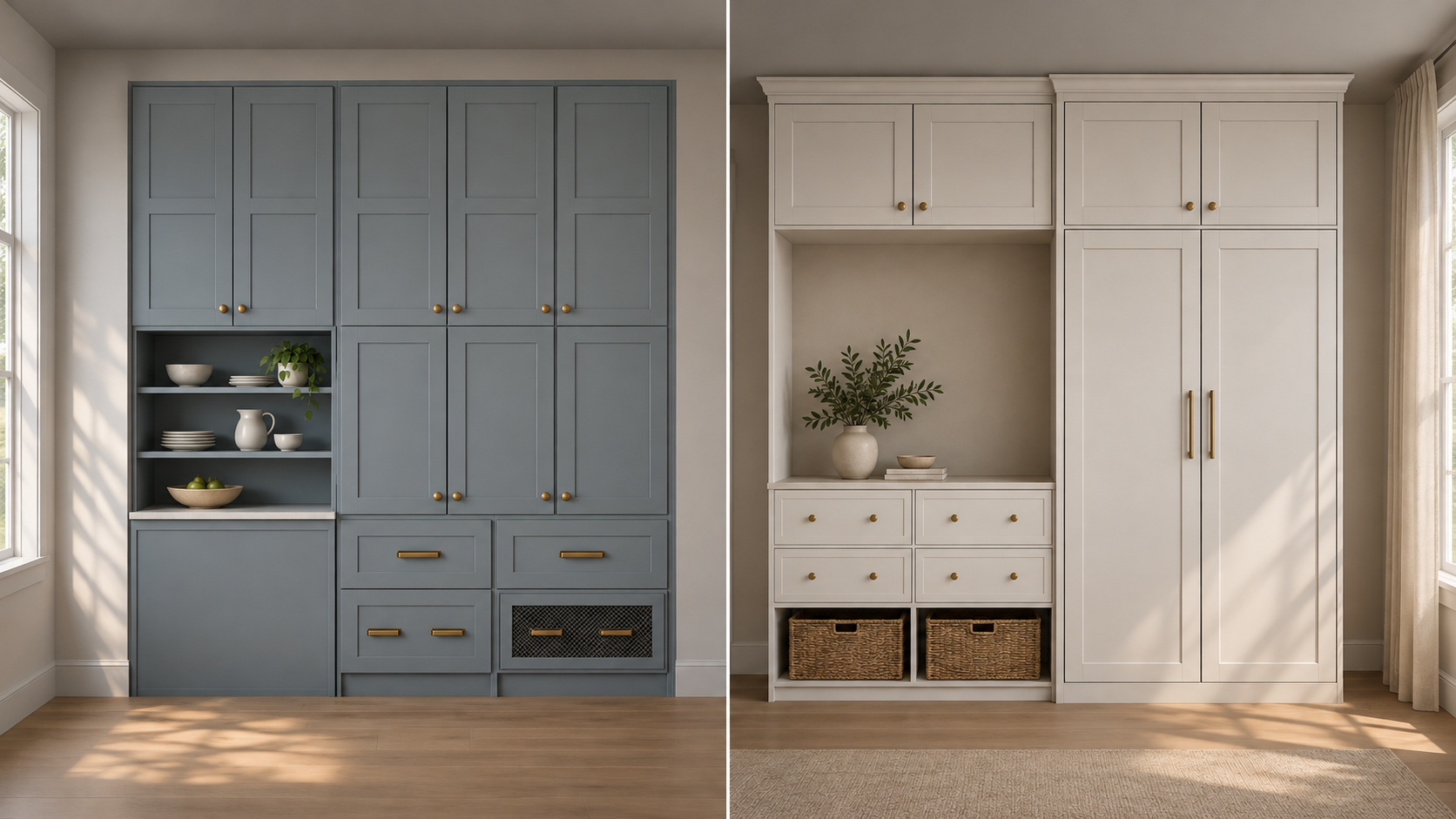
If you have peeling thermofoil cabinet doors or bubbling vinyl, start by checking what has failed. Is the vinyl lifting from an otherwise sound door, or is the board underneath swollen or damaged? The answer helps you compare repair, refinishing and replacement without assuming the whole kitchen needs rebuilding.
Miter5 manufactures made-to-order replacement cabinet doors and drawer fronts in our Oakville workshop for Toronto and GTA projects. If your cabinet boxes are suitable to keep, new fronts may be an option. First, assess the damage and the work needed around it.
What is thermofoil, and what can go wrong?
Thermofoil is a vinyl film bonded over a manufactured-board core, commonly medium-density fibreboard (MDF). The film forms the visible surface; it is separate from the board beneath it.
Peeling edges and bubbles can indicate that the film is separating from the core. A swollen edge, distorted door or damaged hinge fixing raises a different concern: the condition of the underlying board. The appearance alone does not establish why the damage happened.
Excessive heat and moisture deserve attention. KraftMaid’s cabinet care guide warns about intense heat from self-cleaning appliances and prolonged damp contact. Follow the guidance for your own cabinets and appliances, and have any suspected leak, steam exposure or appliance-clearance problem assessed before fitting repaired or replacement fronts.
Assess damaged thermofoil doors and the cabinetry
Look beyond the most visible patch of peeling. A useful assessment covers:
- The coating: note where it has lifted, cracked or changed appearance, and whether the damage affects one front or several.
- The door core: check for swelling, distortion, crumbling edges and damaged areas around hinge screws. Moisture can affect MDF; a new surface finish does not correct a distorted board.
- The cabinet boxes: inspect the retained cabinetry, especially around the sink and appliances. New fronts will not repair damaged boxes or improve a layout that no longer works.
- The hardware: check hinges, mounting points and drawer operation. A loose or rubbing door may need hardware attention as well as surface work.
- The damage source: record nearby heat, water or steam exposure to help your contractor investigate the cause.
Next, take close-up photographs of the damage, wider views of the cabinetry and pictures of the hinges and door backs. These help with an initial discussion; a physical assessment or sample may still be needed.
Repair, refinish or replace peeling thermofoil cabinet doors?
Repair: assess a limited area of damage
For an isolated lifted edge or small damaged area, ask the original supplier or a specialist whether a local repair is suitable. The condition of the film, adhesive bond and core will affect the recommendation. Agree on the likely appearance and limitations before proceeding; a repair should not be assumed to disappear into the surrounding finish.
Refinishing: check the surface before choosing paint
Thermofoil is not automatically unpaintable. Benjamin Moore’s ADVANCE primer technical data sheet includes thermofoil in a preparation and coating system. A refinisher should assess the actual surface and confirm a currently suitable system with the coating manufacturer.
However, painting over loose film does not resolve the separation beneath it. Ask whether the existing coating can remain, whether removal and further preparation are appropriate, and whether the exposed board is worth refinishing. Then compare that complete scope with replacement. If the doors are sound and your main concern is their colour or profile, see our painting versus replacing cabinet doors guide.
Replacement: consider the fronts and what stays
Replacement is worth comparing when several fronts are damaged, the cores are unsuitable to retain, or the repair and refinishing proposal does not meet your needs. It can also provide a different profile, subject to fit and specification review.
For suitable existing cabinetry, browse Miter5’s made-to-order cabinet doors and drawer fronts. Our guide to replacing cabinet doors and drawer fronts explains the wider decision about retaining cabinet boxes.
Three replacement profiles to consider
Compare a smooth slab, a framed Shaker and a narrow-frame Shaker. Each offers a different look for replacement doors; suitability for your cabinetry requires review.

A flat, uninterrupted face for a simple replacement scheme.
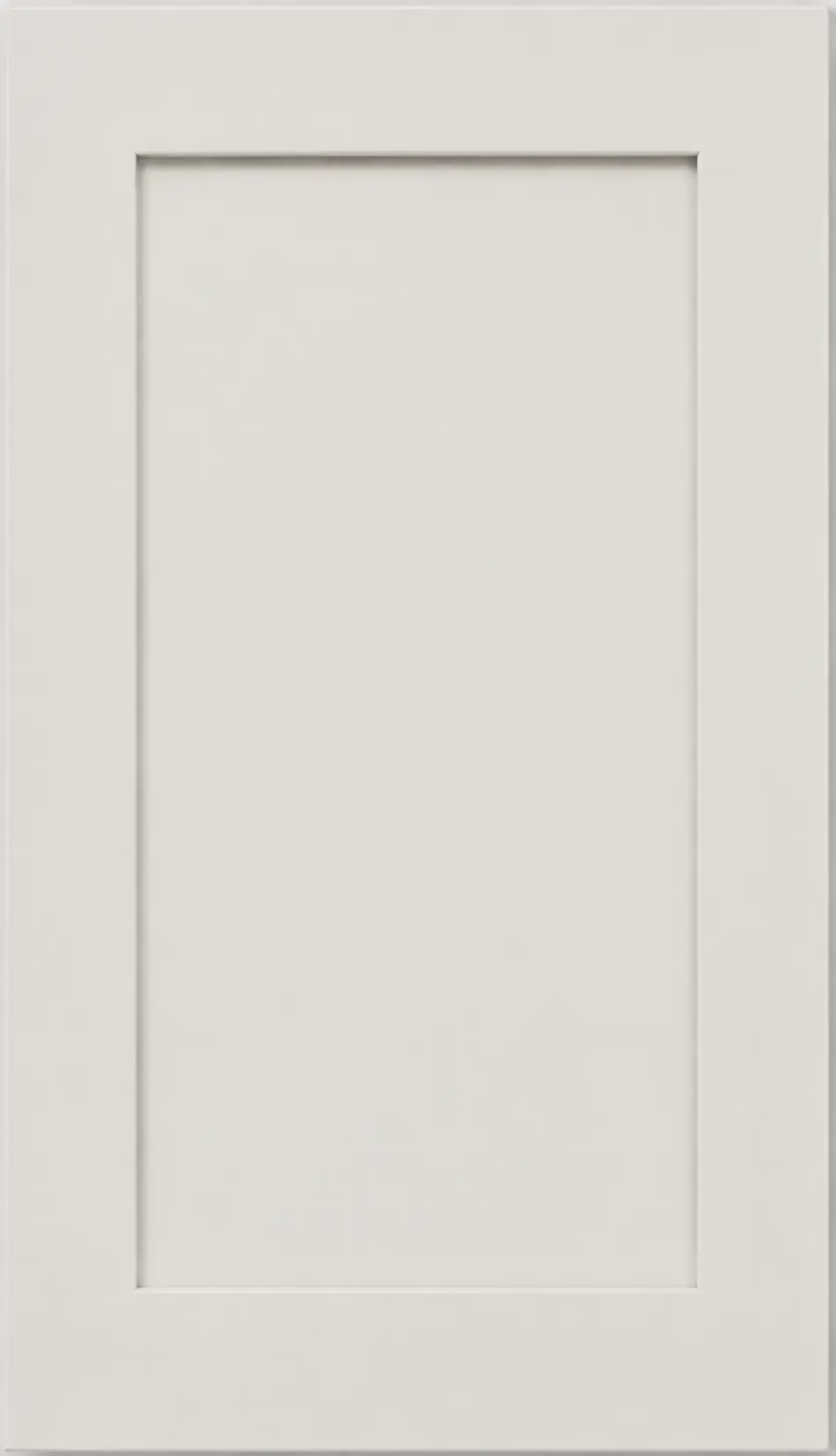
A framed profile with a recessed centre for a familiar Shaker look.

A recessed centre with narrow 3/4-inch rails and stiles for a slimmer frame.
Also, choose the profile alongside the drawer-front design and the surfaces that will stay visible. Replacing a single damaged front may be possible, but matching an older profile, colour, sheen or aged finish requires assessment.
Coordinate the finish, fit and installation
A supplied-front order is one part of a kitchen or vanity update. Before ordering, agree on:
- Visible cabinet surfaces: decide how exposed ends, face frames, fillers, toe kicks and trim will coordinate with the new fronts.
- Colour and finish: review a suitable physical sample. Screen colours and a shared colour name do not guarantee a visual match.
- Finished dimensions: confirm the actual door and drawer-front sizes, gaps and overlaps. Cabinet-opening dimensions alone are not the finished-front specification.
- Hinges and drawer fronts: confirm hardware compatibility, any required hinge boring, handle positions and drawer-front attachment details.
- Responsibilities: identify who measures, approves specifications, finishes retained surfaces, removes the old fronts and installs the new ones.
Do not assume measuring, hinge boring, cabinet-box refinishing or installation is included in the supplied-door estimate. Confirm the actual project scope with Miter5 and your contractor. Our replacement cabinet door pricing guide explains the cost factors and exclusions without relying on a generic price for your kitchen.
Peeling thermofoil cabinet doors? Discuss your replacement project
Send Miter5 photos, your project location and the approximate number of doors and drawer fronts you want to replace so we can review your replacement requirements. Include wider cabinet views, close-ups of damage and any preferred profile or finish. You can email the information to admin@miter5.ca.
Photos help with an initial assessment. Before manufacturing, Miter5 needs approved finished dimensions and specifications; photographs cannot replace those details.
Browse the cabinet door collection and build an estimate. Compare profiles, enter confirmed finished sizes and quantities in the calculator, then submit your quote request for review. If your sizes or hardware requirements are not settled, send your project information first so we can identify the outstanding details.